


How to Verify Grass-Fed Beef Claims: A 2026 Guide

Table of Contents
Why Grass-Fed Beef Claims Are Hard to Verify
Grass-Fed vs Grass-Finished Beef: What Each Term Really Means
How to Read Beef Labels Without Getting Fooled
What a Grass-Fed Beef Label Must Include
Label Wording That Signals a Weak Claim
What Grass-Fed Beef Certification Actually Verifies
The three layers of verification you will actually encounter
What a certification standard typically covers, and what it leaves out
How to check whether a certification is legitimate
The limitation nobody mentions
Questions to Ask a Grass-Fed Beef Farmer Before You Buy
How to Verify Grass-Fed Beef Claims When Buying Online
A Step-by-Step Verification Checklist for Grass-Fed Beef
The two-minute store check
How to score what you find
What to do when the signals conflict
The decision rule
Frequently Asked Questions
Last Updated: October 16, 2026
Why Grass-Fed Beef Claims Are Hard to Verify
Learning how to verify grass fed beef claims starts with one hard truth: the label on the package tells you less than you think.
Customers want to know how to verify grass fed beef claims before they spend their grocery budget.
Here's the problem. A claim can be technically true and still misleading.
Below, we'll show you exactly what to check, what to ask, and which signals separate a real claim from a marketing phrase.
Grass-Fed vs Grass-Finished Beef: What Each Term Really Means
Grass-fed beef means cattle ate grass and forage for most of their lives. Grass-finished beef means the animal ate only grass and forage right up to harvest, with no grain at the end.
That final stretch is where the two terms split.
Many producers finish cattle on grain because it adds weight fast. The animal still spent most of its life on pasture, so a grass-fed label can apply.
For shoppers, this matters. If you want beef from cattle raised entirely on grass, you want the grass-finished claim, not just grass-fed.
Grass-fed: grass for most of life, grain possible at the end
Grass-finished: grass and forage only, all the way to harvest
100% grass-fed: a stronger claim that should mean no grain at any point
The wording is close. The meaning is not.
How to Read Beef Labels Without Getting Fooled
Reading a beef label well means knowing which words carry legal weight and which are just marketing. Some phrases are defined and checked. Others mean almost nothing on their own.

Start with the fine print, not the front of the package. The front sells. The back and the small print tell you what was actually verified.
What a Grass-Fed Beef Label Must Include
A trustworthy grass-fed beef label should include the producer's name, a clear claim about diet, and a certification logo if one applies. Without a named producer and a verifiable standard, the claim rests on trust alone.
Look for these elements:
The producer or farm name
A specific diet claim (grass-fed or grass-finished)
A certification mark from a recognized body
If a package has none of these, treat the claim as unproven.
Label Wording That Signals a Weak Claim
Vague wording is the biggest red flag. Phrases like "grass-fed style" or "pasture-raised" without a diet claim tell you little about what the animal actually ate.
Watch for these weak signals:
"Grass-fed" with no producer named
"Natural" used as a stand-in for grass-fed
No certification logo anywhere on the pack
The thing nobody tells you about labels is that the boldest words are often the least regulated.
Watch Out Treating "natural" as proof of grass-fed is a common and costly mistake. "Natural" says nothing about diet. You can pay a grass-fed price for beef that was finished on grain.
What Grass-Fed Beef Certification Actually Verifies
A grass-fed certification is not one thing. It is a written standard, applied to a specific set of claims, checked by a specific auditor, at a specific point in the supply chain. Two packages can both carry a logo and prove very different things. The gap most guides leave open is this: certification is a scope, not a stamp.
The three layers of verification you will actually encounter
Most grass-fed signals fall into one of three layers, and each proves something different:
Label approval. A company submits a label to a government food-inspection authority, which reviews whether the claim is truthful and not misleading. Approval means the wording is permitted. It does not mean an inspector visited the farm or tested the feed.
Process verification. A program audits the producer's feed and handling records against a written standard. This is where diet claims get real teeth, because someone checks the paperwork and the feeding practice.
Independent certification. A third-party certifier with a published standard audits the operation on a recurring schedule. This is the strongest layer for a diet claim, but only to the extent the standard covers diet.
A label can be approved without ever being process-verified. A certification can be real but narrow. Knowing which layer you are looking at tells you how much the claim is worth.
What a certification standard typically covers, and what it leaves out
A well-built grass-fed standard usually defines:
The allowed diet and the forage percentage
Whether grain is permitted at any stage, including finishing
Record-keeping the producer must maintain
What it often does not cover:
Animal welfare in detail, unless the standard says so
Antibiotic or hormone use, unless separately claimed
How the animal was transported or processed
So a certification can fully prove the diet claim and still tell you nothing about welfare, antibiotics, or processing. That is not a flaw in certification. It is a limit you need to understand before you treat the logo as a complete answer.
How to check whether a certification is legitimate
A real certification has three things you can verify from your phone: a named certifier, a published standard, and an independent auditor. Run this test:
Search the certifier's name. A legitimate body has a website and a standard document, not just a logo.
Find the published standard. Look for the actual diet rules, not a marketing summary.
Confirm who audits. The auditor should be independent of the producer.
Check the audit frequency. Annual or periodic audits are stronger than a one-time review.
Match the logo to the certifier. A logo with no findable standard is decoration.
Watch Out A certification logo proves the producer met a specific written standard. It does not prove the standard covers everything you care about. Read the scope before you trust the seal.
The limitation nobody mentions
Certification verifies a process, not a package. It confirms that the operation followed the standard during the audit window. It does not follow the specific cut in your hand back to a specific animal unless the supply chain also carries lot-level traceability. That is why the strongest proof combines certification with traceability, not certification alone.
Key Takeaway Ask three questions of any certification: What does the standard cover? Who audits it, and how often? Does the supply chain connect the standard to this package? If you cannot answer all three, you have a logo, not a verification.
Questions to Ask a Grass-Fed Beef Farmer Before You Buy
Asking the right questions is the fastest way to verify a claim, and the answers tell you more than any label. A producer with nothing to hide answers plainly.
Ask these directly:
What did the cattle eat in their final months?
Do you finish on grain at any point?
Who audits your claims, and how often?
Now here's the part most guides skip: how to read the answers. Vague replies are a warning.
Clear, specific answers signal a real operation. Deflection signals a claim you should doubt.
Pro Tip Ask the finishing question first: "What did they eat in the last 90 days?" It's the hardest one to fake and the most telling. A producer who answers it without hesitation is usually the real thing.
How to Verify Grass-Fed Beef Claims When Buying Online
Verifying an online claim is harder because you can't see the product or the farm. So you lean on documentation and traceability instead.
When you buy online, check for:
A named farm or producer on the product page
Certification details you can look up
A traceability or lot number on the pack
You can also ask before you order. A seller who won't answer diet questions in writing is telling you something.
Traceability matters most here.
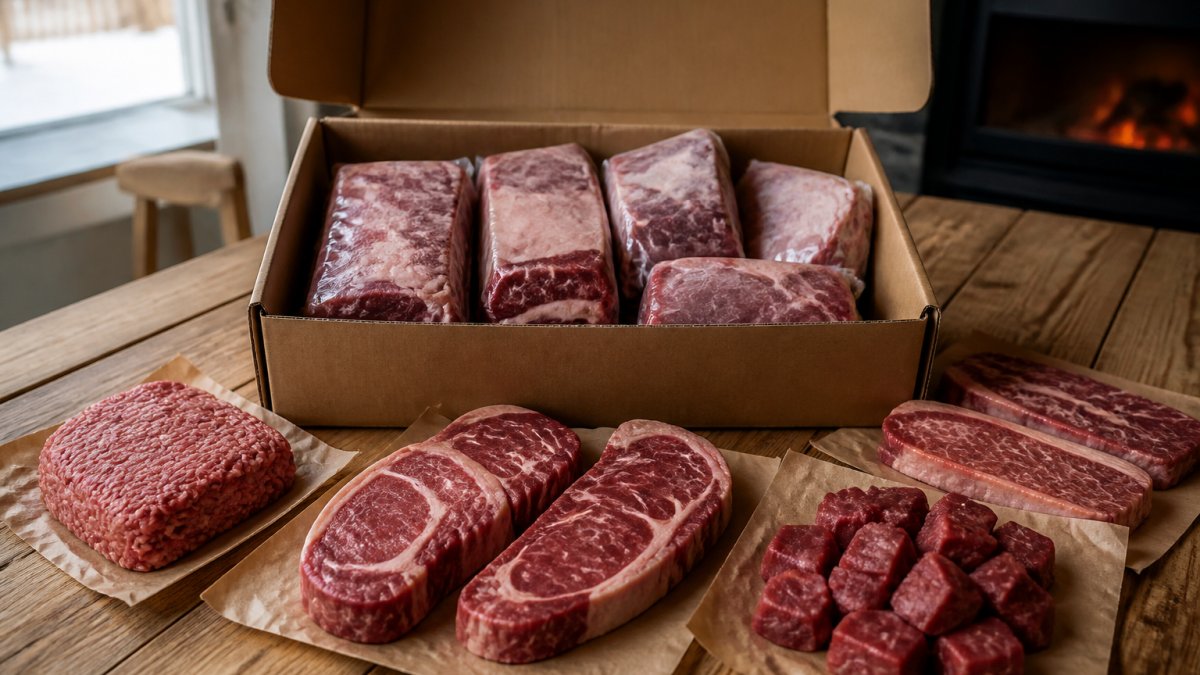
We deliver straight from our family farm and can answer diet questions directly, because we raised the animals.
A Step-by-Step Verification Checklist for Grass-Fed Beef
Most checklists tell you what to look for. This one tells you what to do when the signals disagree. Use it at the store, at a farm gate, or on a product page. It takes about two minutes and it ends in a decision, not a guess.
The two-minute store check
Work in this order. Stop as soon as a step fails.
Read the back label first. Find the producer name and the exact diet claim. If there is no producer and no specific diet claim, stop here.
Check the wording. Confirm it says grass-fed or grass-finished, not "natural," "grass-fed style," or a farm story with no feed claim.
Look for a certification logo. Note the certifier's name. You will look it up in step 4.
Verify the certifier. Search the name. Confirm a published standard and an independent auditor. No standard, no credit.
Check traceability. Look for a lot code, batch number, or a stated way to trace the cut to its source.
Ask the finishing question. "What did the cattle eat in their last 90 days?" This is the hardest answer to fake.
Assess the answers. Specific replies build trust. Vague or dodged replies do not.
How to score what you find
Not every signal carries equal weight. Score each one as strong, partial, or weak:
Signal | Strong | Partial | Weak |
Diet wording | Grass-finished, specific | Grass-fed, no finishing detail | "Natural," "grass-fed style" |
Producer | Named farm with contact info | Brand name only | No producer listed |
Certification | Named, published standard, independent audit | Logo with findable certifier, unclear scope | No logo or unfindable mark |
Traceability | Lot code linking to source | Batch or date code only | No way to trace |
Answers | Specific, consistent, documented | General but plausible | Vague or dodged |
What to do when the signals conflict
This is the part most guides skip. Real packages rarely score strong across the board.
Strong certification, no traceability. Trust the diet claim, but accept you cannot confirm this specific cut. Fine for general buying, weaker for premium prices.
Strong traceability, no certification. The producer may be small and uncertified but transparent. Ask the finishing question and request records. Transparency can substitute for a logo, but only if the answers hold up.
Strong wording, weak everything else. Treat it as marketing. The boldest words are often the least verified.
The decision rule
Buy with confidence when you have at least two strong signals, one of which is either a verified certification or a producer who answers the finishing question with specifics. Buy with caution when you have one strong signal and the rest partial. Walk away when the only signal is wording on the front of the package.
Pro Tip Ask the finishing question before you ask about price. A producer who answers it without hesitation is usually the real thing. A producer who pivots to the farm story is usually not.
Key Takeaway The strongest proof combines three things: a specific diet claim, a named and audited certification, and a producer willing to answer the finishing question directly. Any one alone is weaker than all three together. When signals conflict, weight certification and traceability above wording every time.
Frequently Asked Questions
How can I tell if beef is actually grass-fed?
Look for a specific certification logo from a recognized program. In Canada, the Organic logo requires a 100% grass-fed diet for beef. Ask the farmer directly about pasture access, feed sources, and how long the animals were on grass. Check for third-party verification, not just a label claim. Appearance, color, or price alone cannot prove a grass-fed claim.
Does grass-fed beef have to be certified in Canada?
No. Grass-fed is a voluntary marketing claim, not a mandatory standard. A producer can use the term without certification if it is truthful and not misleading. However, without third-party certification, you rely on the producer's honesty. Certifications like Canadian Organic or programs verified by groups such as A Greener World provide independent audits that back up the claim.
Can you verify a grass-fed claim without third-party certification?
You can verify it by asking the producer detailed questions: What did the cattle eat after weaning? Were they ever fed grain? How many days per year were they on pasture? Request documentation such as feed records or affidavits. Visit the farm if possible. Without certification, your confidence depends on the producer's transparency and your own assessment.
What is the difference between grass-fed and grass-finished beef?
Grass-fed means the animal ate grass at some point, but it may have been grain-finished later. Grass-finished means the animal ate only grass and forage for its entire life, with no grain. Grass-finished is a stricter claim. If you want beef from cattle raised entirely on pasture, look for the term grass-finished or 100% grass-fed.
Verifying grass-fed beef claims comes down to paperwork, wording, and willingness to answer hard questions. Labels sell, but records prove. When you're ready to skip the guesswork, Pure Alberta Beef offers 100% Canadian beef, humanely raised and minimally processed, with the transparency to back it up. Our beef comes from trusted local Alberta farmers and is personally delivered from our family farm. Get started with Pure Alberta Beef and know exactly what's on your plate.
View Products
Comments